
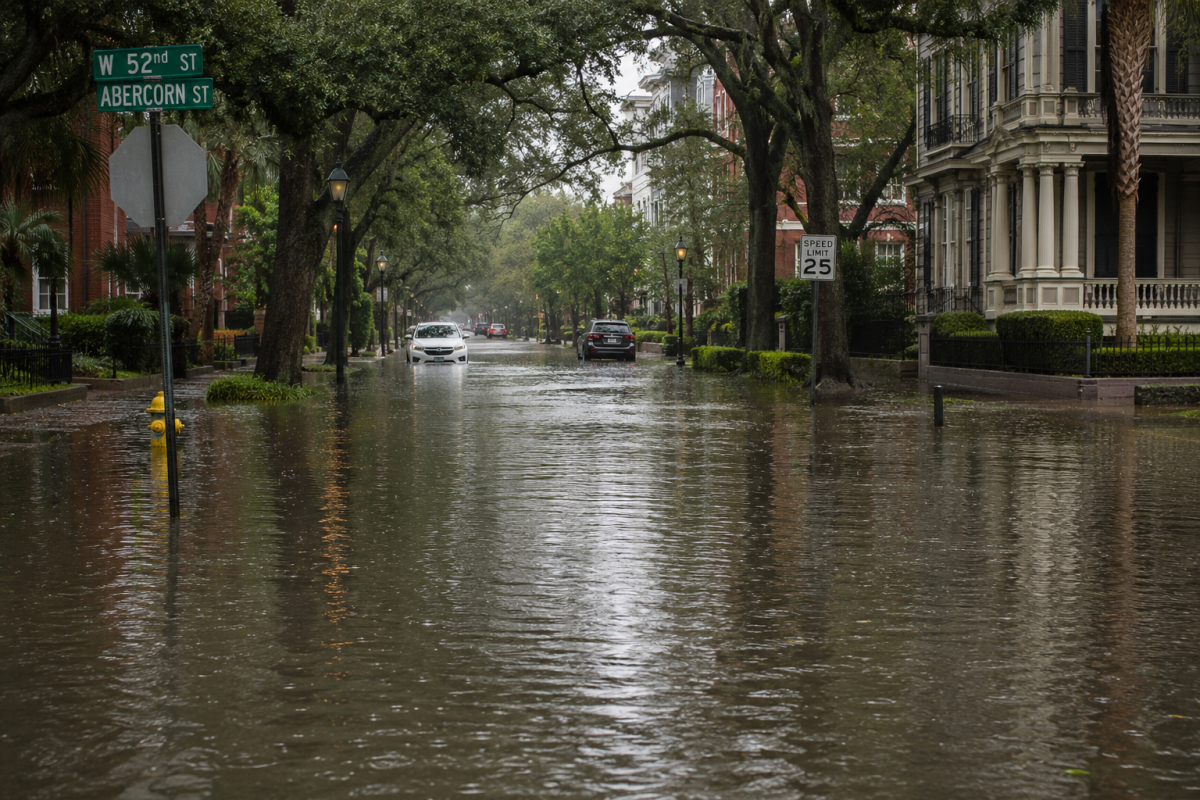
Savannah is beautiful for a lot of reasons: the oak trees, the historic squares, the riverfront, the marshes, and the coastal lifestyle. Unfortunately, some of the same things that make Savannah so charming also make it more vulnerable to flooding. Living near water is wonderful until the water decides it wants to visit your living room.
So, how bad is flooding in Savannah? The honest answer is that flooding is a real and ongoing concern, especially during heavy rain, tropical storms, hurricanes, storm surge events, and unusually high tides.
Savannah sits in coastal Chatham County, where low elevation, tidal influence, marsh systems, aging drainage areas, and intense rainfall can all contribute to flood risk. The nearby Fort Pulaski tide gauge has been tracking water levels since 1935, and sea levels there have risen by more than 9 inches since that time. That may not sound dramatic at first, but when you add higher tides, storm surge, and heavy rainfall, those extra inches can make a big difference.
Flooding in Savannah is not limited to waterfront properties either. FEMA notes that even low- and moderate-risk areas can still flood, and homeowners in those areas may be more likely to experience flooding than a house fire over a 30-year period. That is a pretty strong reminder that “I’m not in a flood zone” does not always mean “I’m safe from flooding.”
Common Causes of Flooding in Savannah
Flooding in the Savannah area can happen for several reasons, including:
- Heavy rainfall that overwhelms storm drains
- Tropical storms and hurricanes
- Storm surge from coastal weather systems
- High tide flooding, sometimes called sunny-day flooding
- Low-lying streets and neighborhoods
- Poor drainage around homes and businesses
- Sewage backups caused by overwhelmed or blocked systems
Some flooding is easy to see right away, like water pooling in streets or entering a crawl space. Other problems are more sneaky. Moisture can hide behind walls, under flooring, inside cabinets, and in insulation. That hidden water can lead to odors, structural damage, and mold concerns if it is not handled properly.
Why Fast Cleanup Matters
When floodwater or sewage-contaminated water enters a home, time matters. The longer water sits, the more damage it can cause. Flooring can warp, drywall can absorb moisture, cabinets can swell, and personal belongings can become difficult or impossible to restore.
Professional cleanup is especially important if the water may contain sewage, bacteria, or other contaminants. This is not the time for a mop, a box fan, and a heroic pair of flip-flops. Proper extraction, cleaning, sanitizing, drying, and moisture control help protect both the property and the people inside it.
So, How Bad is Flooding in Savannah?
Flooding in Savannah is serious enough that every homeowner and business owner should pay attention to it. Not every property will flood, and not every storm will cause major damage, but the risk is real, growing, and often underestimated.
The definitive answer: flooding in Savannah is bad enough to prepare for before it happens, act quickly when it does, and call Harper Special Services when water or sewage affects your property.